

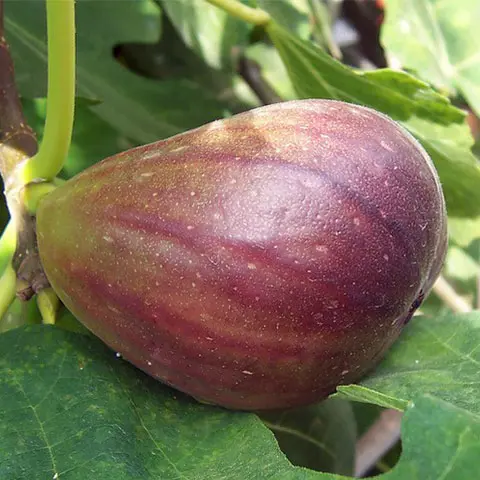
Texas Everbearing Fig
Original price was: $55.99.$39.19Current price is: $39.19.
- Product guarantee 100% satisfaction
- Online customer care, always here for you.
- Protect Your Information, Shop with Safe Payments
- Quality that lasts, prices that don't.

About the Texas Everbearing Fig Tree
This hardy shrub-tree is a gift that keeps on giving, offering up a generous supply of deep purple, pear-shaped fruit with a mesmerizing pinkish-gold flesh that’s just as sweet as your favorite candy. But don’t be fooled by its sweetness—this fig’s moderately closed small eye helps prevent issues like splitting and souring.
This fig isn’t just a treat for your taste buds. Its large, shiny, lobed foliage adds an extra touch of beauty to your garden, almost rivaling the charm of the fruit itself. When it comes to culinary adventures, this fig is a versatile partner. Throw it into your cakes, jams, and cookies, or get creative by running fig halves under the broiler, drizzling them with honey, and enjoying them with a dollop of mascarpone or cream cheese.
The Texas Everbearing Fig Tree isn’t just a one-time wonder. It rewards you with two harvests—first in May with the breba crop, and then in full swing from June through August. Remember, the best flavors develop when the figs ripen right on the tree. To ensure your harvest stays yours, consider using netting to protect the fruit from eager birds and curious deer.
No need to worry about pollination either, as this tree is self-fruitful. So, if you’re looking for an incredible fig experience, complete with natural beauty, exceptional taste, and a fuss-free harvest, the Texas Everbearing Fig Tree is ready to shine in your garden.
Overwintering Fig Trees in Cooler Climates
If you experience temperatures below freezing, then additional winter protection is necessary for best results.
Potted figs should be placed in an insulated, unheated, preferably dark room or cool basement. Water them monthly until just moist so the roots do not dry out completely.
For fig trees planted in-ground, insulate as much as possible by getting creative. Use chicken wire and burlap or surround with straw bales stuffed with leaves. The pliable branches can be bent in to preserve as much as the plant as possible. What is not covered, will likely die back. Figs fruit on new growth and the insulated roots will send out new growth, even if the top dies.
Photo courtesy of Fir002, Creative Commons License.
| Fruit Color | Purple |
|---|---|
| Fruit Size | Large |
| Pollination | Self-Pollinating |
| Ripens/Harvest | May |
| Shade/Sun | Full Sun |
| Soil Composition | Loamy |
| Soil Moisture | Well Drained |
| Soil pH Level | 5.5 – 8.0 |
| Taste | Sweet |
| Years to Bear | 1 – 2 |
| Zone Range | 7 – 10 |
Be the first to review “Texas Everbearing Fig”
Related products
Nut Trees

Chestnut Trees

Nut Trees
Almond Trees
Almond Trees
Almond Trees
Nut Trees
Nut Trees
Reviews
There are no reviews yet.